General grading framework
Grading Flexibility proposes a framework for grading athletes’ leg/split flexibility. Currently, the framework will focus on maximum range of passive flexibility (with full awareness that active flexibility further complicates the picture).
Core principles for grading:
- 180° split is evaluated with 10 points.
- +/-1 point for +/- 10° of over-/undersplit.
- Technically unclean position will reduce at least 1 point.
- Right and left leg flexibility is graded separately for each athlete (as these are independent and often significantly different).
- Variations of split positions (standing splits and needles) will be graded separately, as they place somewhat different requirements on flexibility. Different athletes can be better or worse at one or the other.
- Currently, passive and active flexibility will not be distinguished. Separating active/dynamic split range might be a future improvement.
Front split
The simplest graded position is the front split. A requirement for a clean front split is with squared hips.
- 180° front split will be scored as 10 points.
- +/-1 point for +/- 10° of over- or undersplit (170° = 9 points, 190° = 11 points, etc).
- Distraction: 180° split with significantly rotated hips scores 10-1 =9 points.
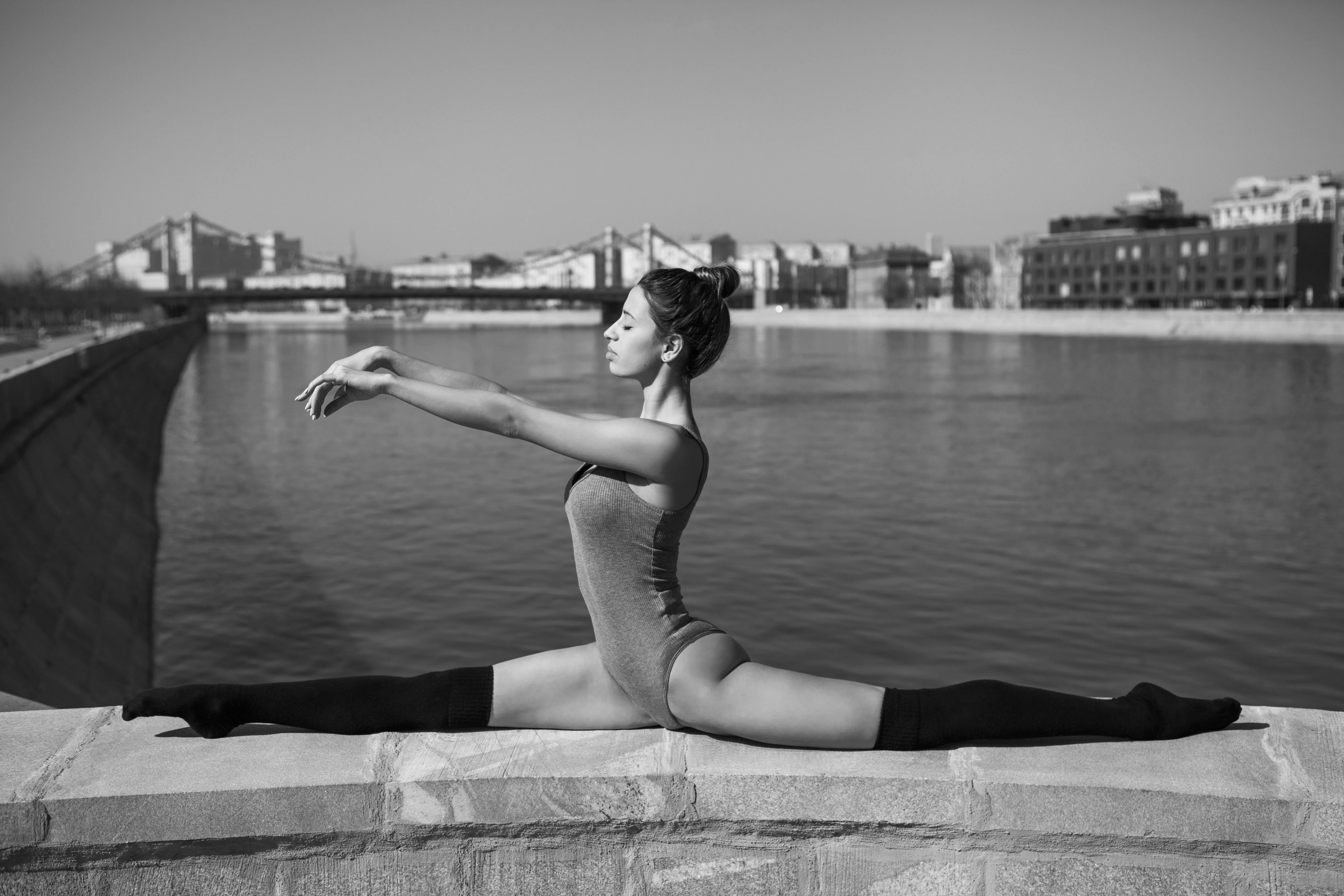
Photo: “Самира Мустафаева Москва” (Samira Mustafayeva) by Nick 163, via Wikimedia Commons, licensed under CC BY-SA 4.0.

Right front split10 A clean 180° split is 10 points. This image would set this athlete's right front split score to 10 (it could end up being higher if this isn't the athletes maximum range).

Photo: “Cheerleader on Red Square in Moscow 2” by Arkadii Solovev, via Wikimedia Commons, licensed under CC BY-SA 4.0.

Right front split9 Another turned hips, quite typical for cheerleader background. Considered "cheating" and would reduce points if evaluated by a rhythmics gymnastics judge.
(Front) split leaps are evaluated together with front splits as the same category, even though they also require a lot of active flexibility, and actually a higher range for clean execution. If an athlete barely manages the static front split on the floor, her odds for performing a clean split-jump are very low.
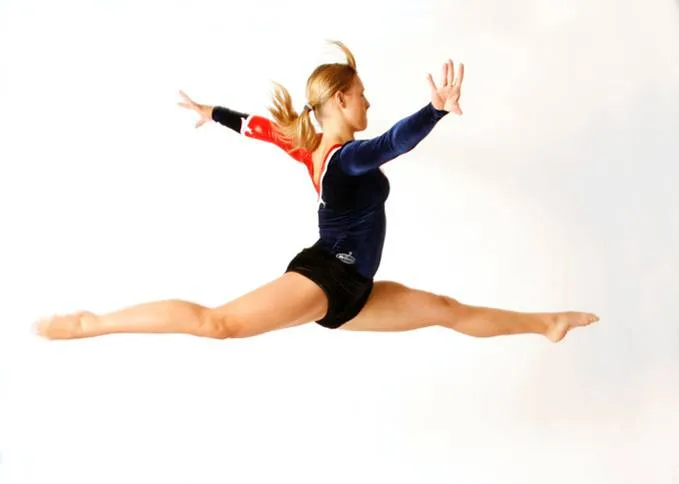
Photo: “Sandra Ostad” by Lars Sørli, Bjerke videregående skole, via Wikimedia Commons, licensed under CC BY-SA 3.0.

Right front split8 Split angle is measured from thigh-to-thigh. Even though the legs of this athlete give an impression of a 180° split, her hips are quite turned thigh-to-thigh angle is 170° at best.
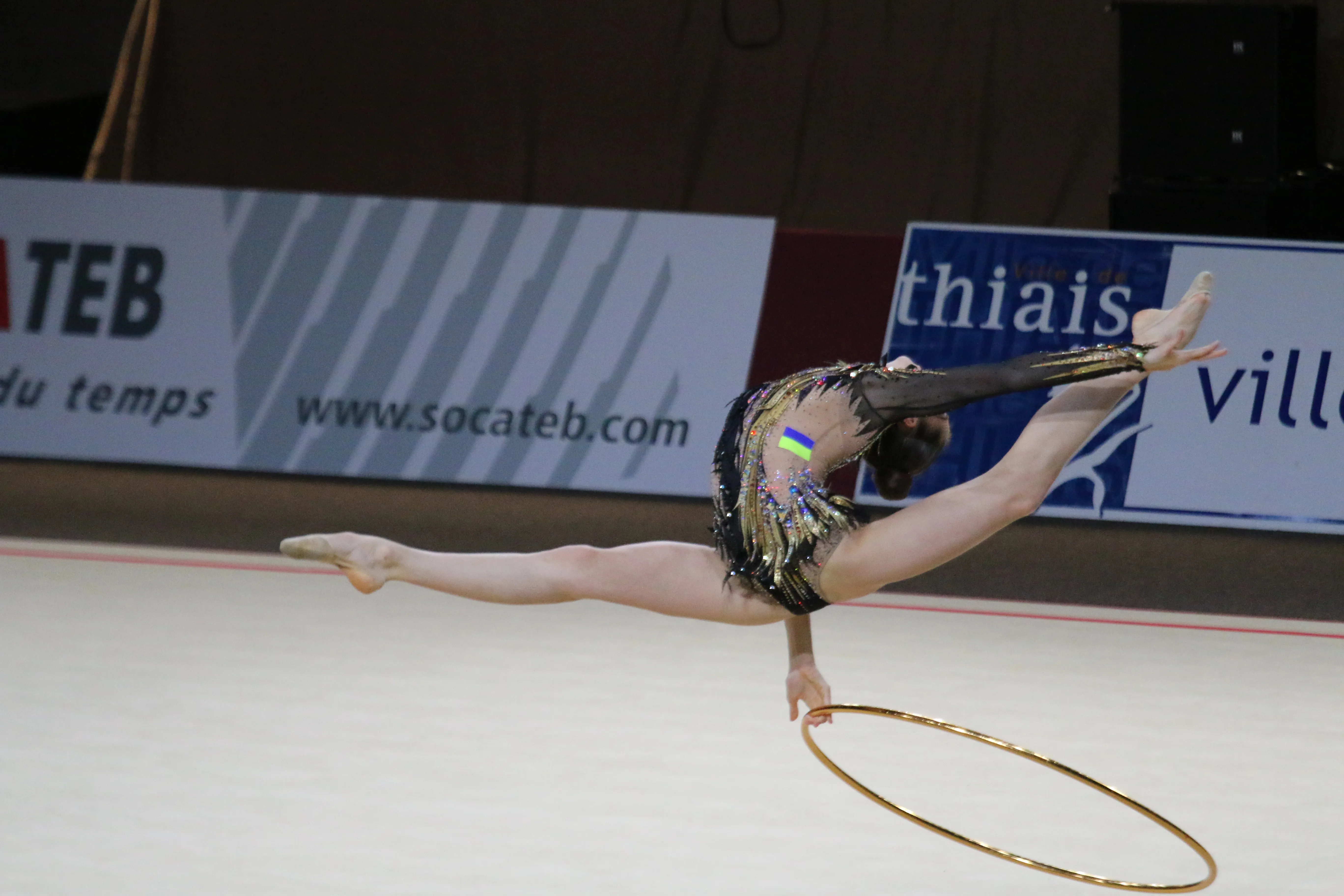
Photo: “EOS 70D 9999 621” (Vlada Nikolchenko at Grand Prix Thiais 2019) by Claire Martin, via Wikimedia Commons, licensed under CC BY-SA 4.0.
Left front split13
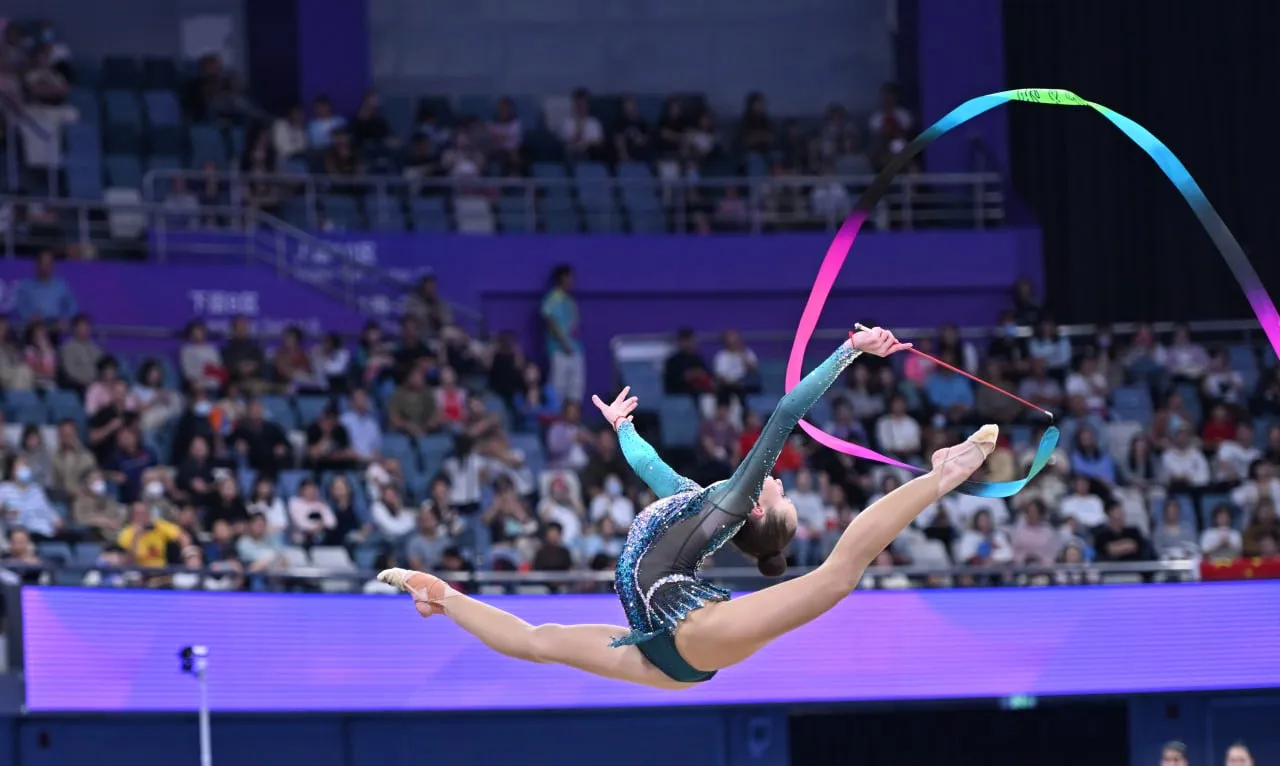
Photo: “2022 Asian Games Takhmina Ikromova Ribbon” by Olympic.uz, via Wikimedia Commons, licensed under CC BY 4.0.

Left front split13 On the contrary, these both are perfectly executed oversplit leaps (200°). This is definitely harder position to execute than a respective passive floor stretch. Mostly only elite rhythmic gymnasts reach such split-leaps. To confidently perform them in competition, gymnast's passive front split flexibility is usually even 10-20° higher. Current framework does not evaluate the dynamic positions separately, but in the future, this might evolve to a separate category.
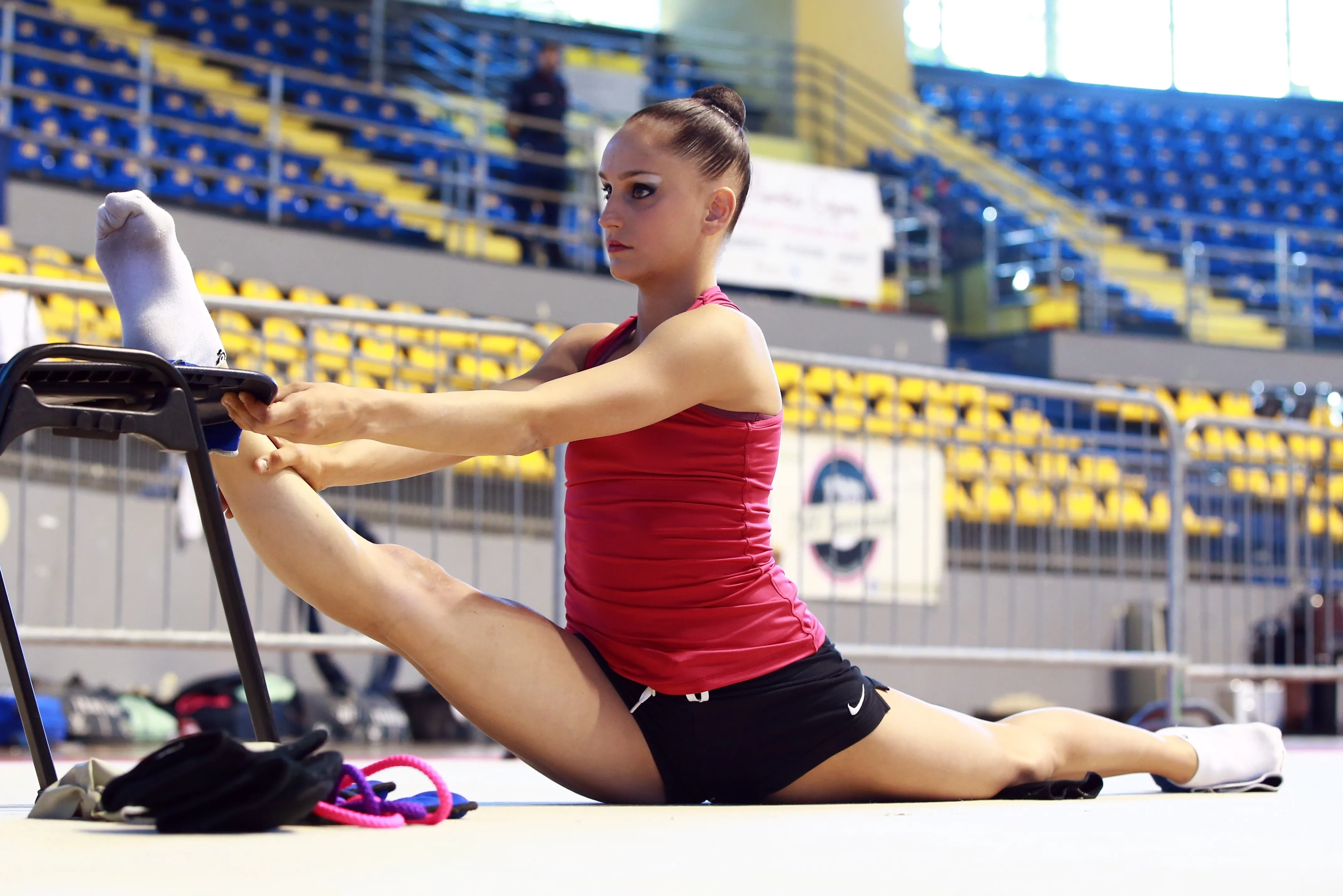
Photo: “Veronica Bertolini (cropped)” by Alessandro Squassoni, via Wikimedia Commons, dedicated to the public domain under CC0 1.0.

Right front split13 This gymnast is executing a clean front oversplit with right leg at roughly 210° => 30° oversplit.
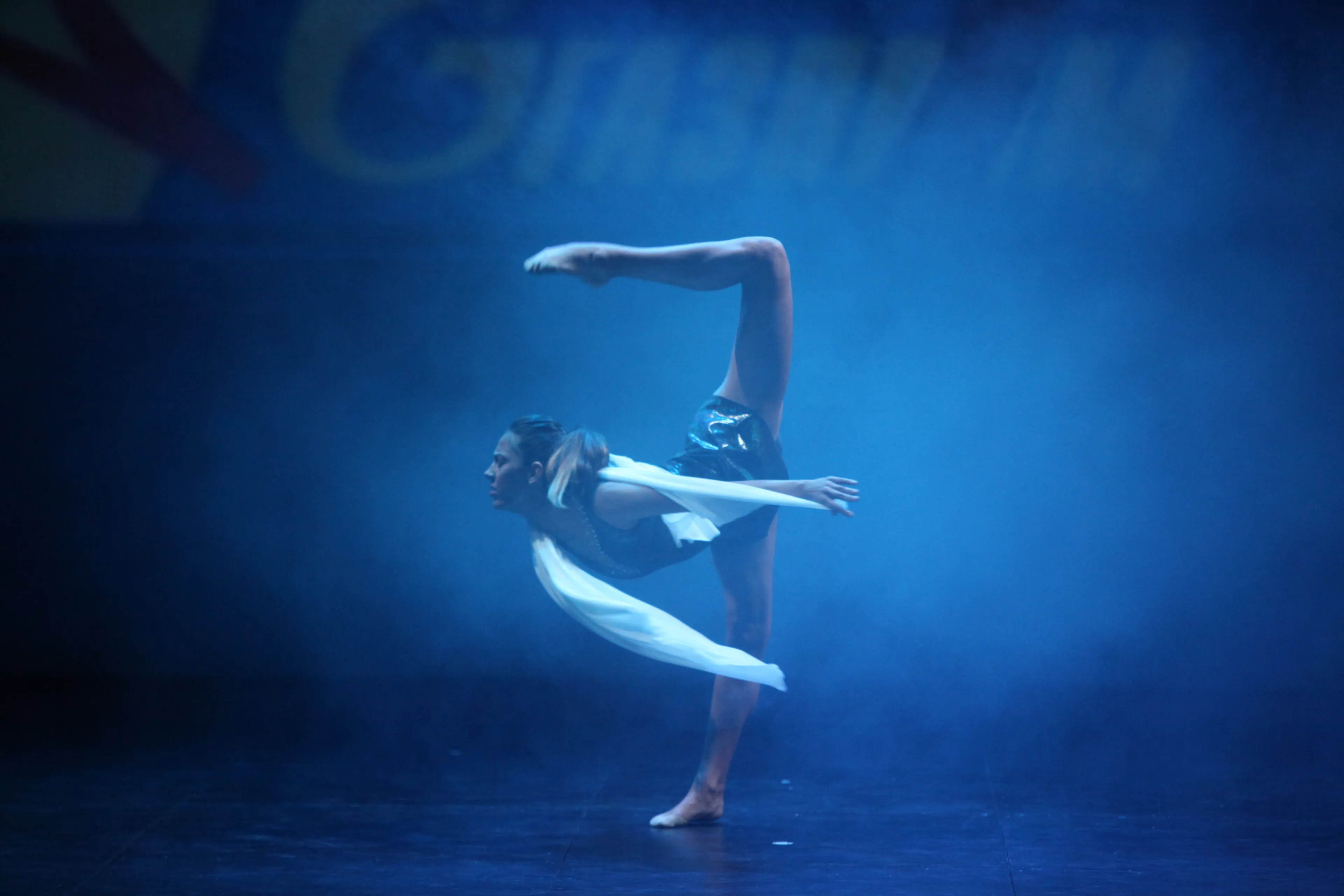
Photo: “Marina Fernández 01” by Premsa Ajuntament de Sabadell, via Wikimedia Commons, licensed under CC BY 2.0.

Right front split11 While this might look like a needle, based on body position, this is a front split with ring.
Straddle split
Straddle split (aka middle split, side split) is the symmetrical split both legs to the side. It is almost always considered a harder skill than front splits.
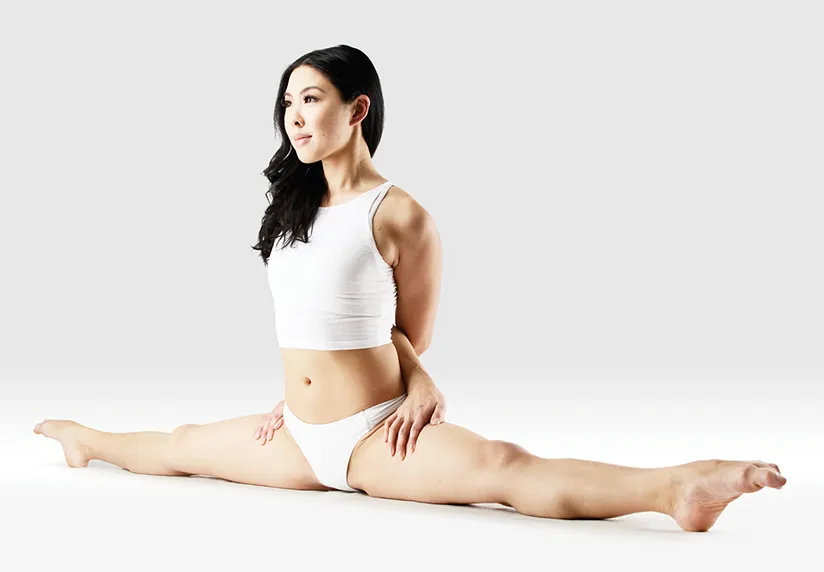
Photo: “Mr-yoga-bound-equal-angle-pose” by Mr. Yoga, via Wikimedia Commons, licensed under CC BY-SA 4.0.

Straddle10 Perfect 180° passive straddle split on the floor.
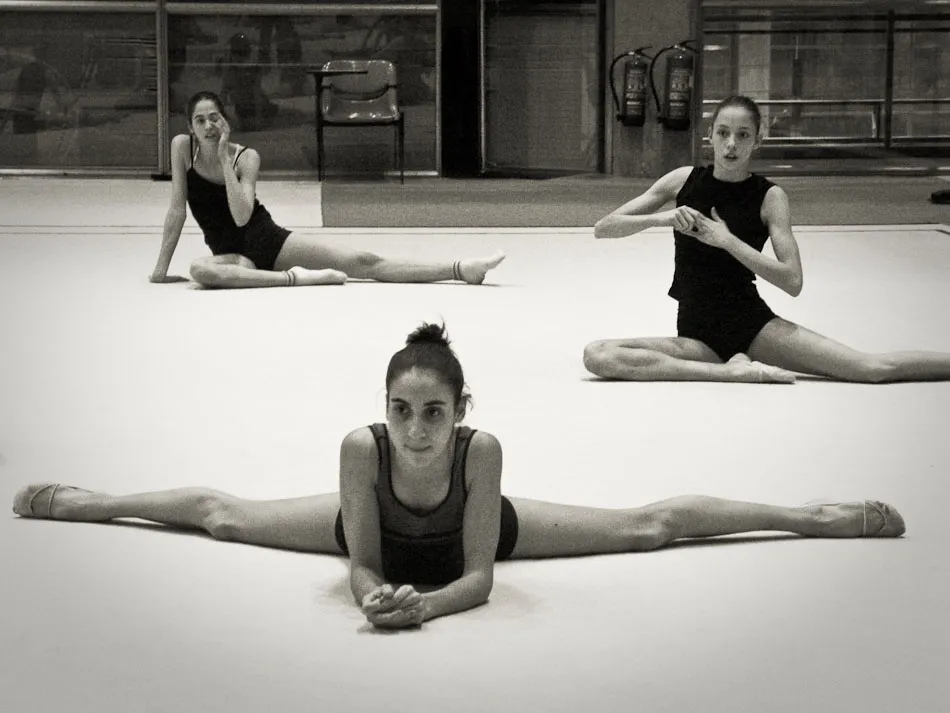
Photo: “Conjunto español 2003 01” by Pablo “Teco” Salto-Weis Azevedo, via Wikimedia Commons, licensed under CC BY-SA 2.0.

Straddle10 A clean 180° straddle split like this one is evaluated at 10 points. Straddle split is not differentiated by front leg as all other positions. Any degrees less than 180° or other reduce from the score. Straddle oversplits are not yet graded (but notice that a lot of tilt positions that look like oversplits are actually not; few athletes have true straddle oversplit flexibility).
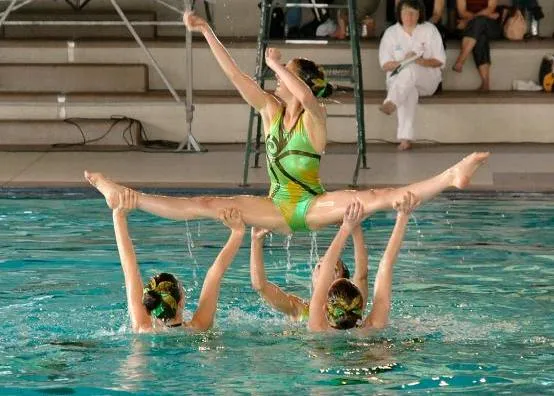
Photo: “Natsynchro” by Colomiers, via Wikimedia Commons, public domain.

Straddle9 An awesome display of flexibility in a discipline that is less remembered for it, but that also puts a high emphasis on athlete flexibility. The angle of the split is nevertheless quite full 180°, so this scores 9.
Straddle split as an active standing split/kick is often referred to as tilt position. It's a graded/mandatory position in rhythmic gymnastics and also very common in ballet. This position is graded together with straddle split.
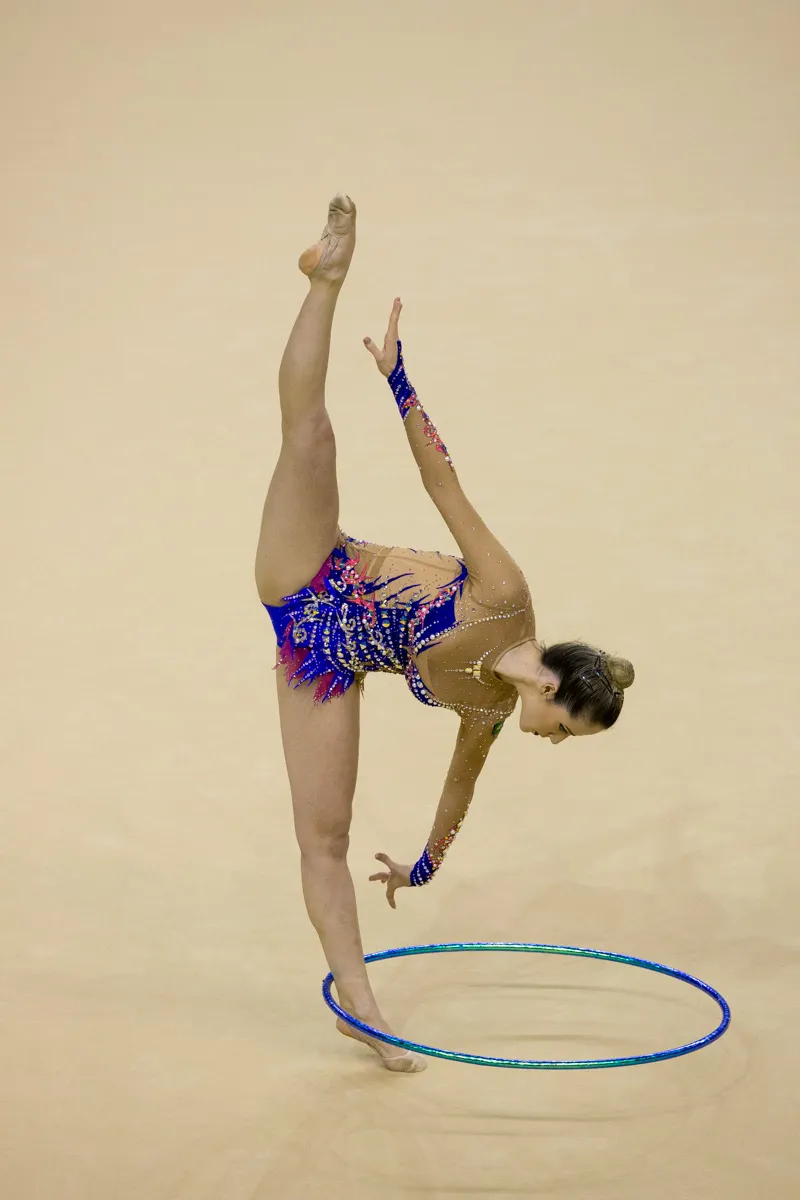
Photo: “Natalia Gaudio 2016 Olympics Test Event 1” by Miriam Jeske / Rede do Esporte, via Wikimedia Commons, licensed under CC BY 3.0 BR.

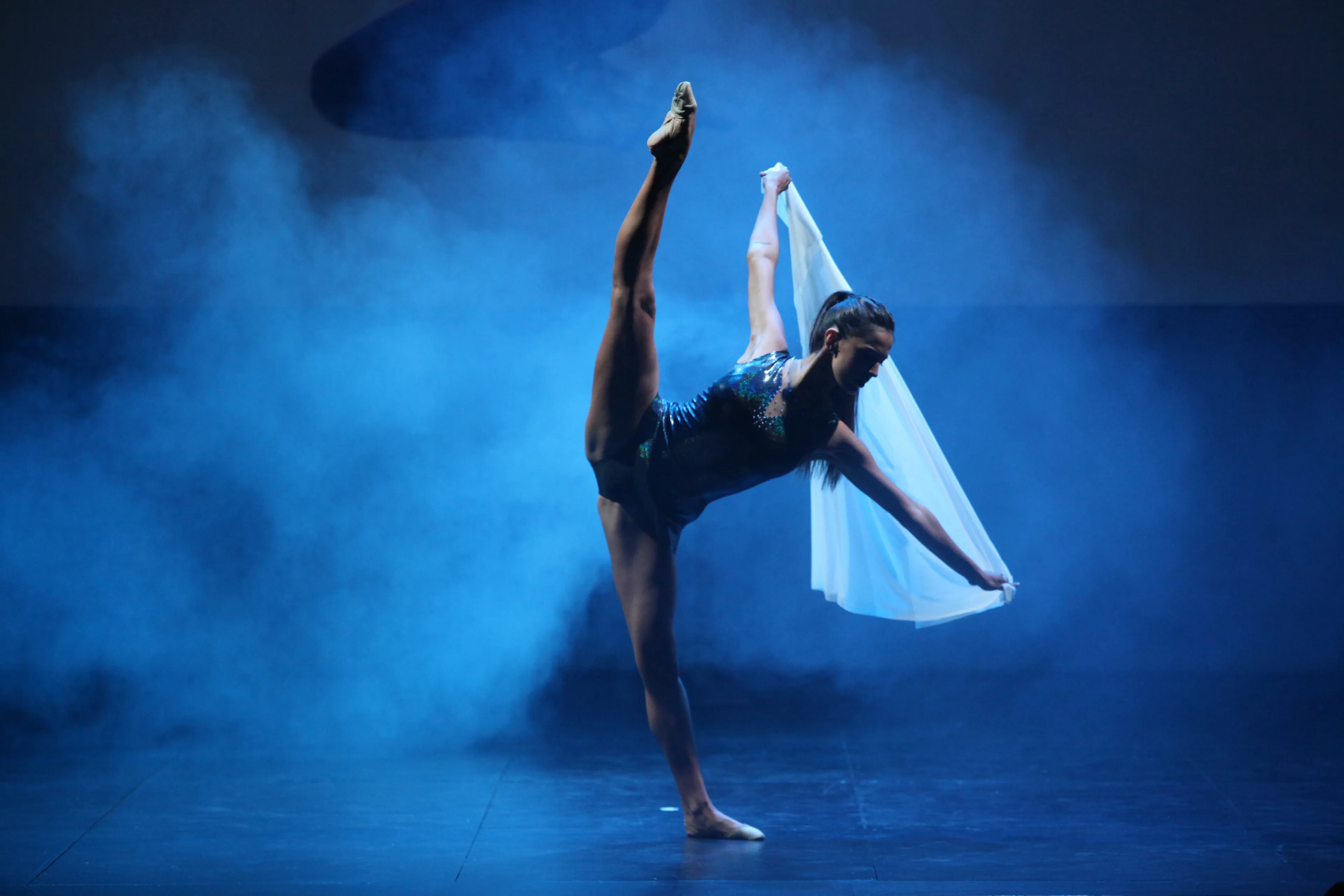
Photo: “Marina Fernández 02” by Premsa Ajuntament de Sabadell, via Wikimedia Commons, licensed under CC BY 2.0.

Straddle10 Another perfect tilt by Marina Fernández.
Straddle10 This is a clean, by-the-book execution of a tilt by a rhythmic gymnast. 180°.
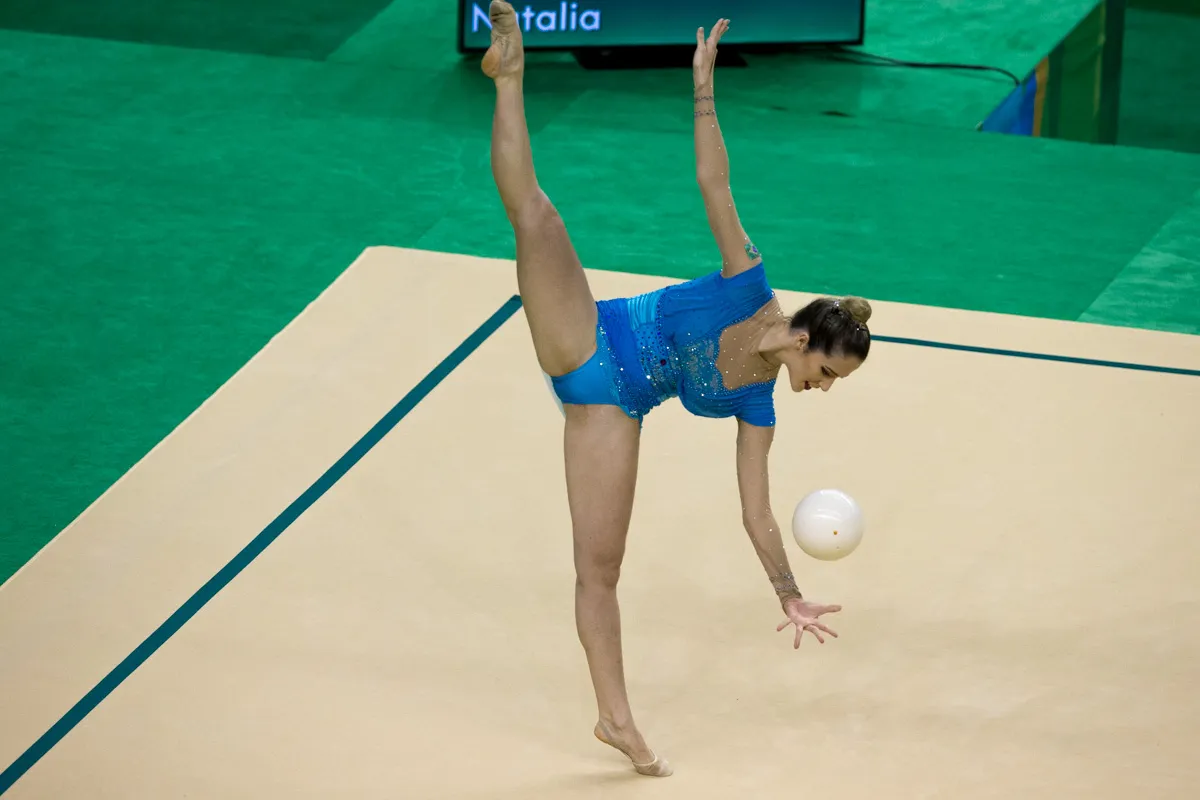
Photo: “Natalia Gaudio 2016 Olympics Test Event 4” by Miriam Jeske / Rede do Esporte, via Wikimedia Commons, licensed under CC BY 3.0 BR.

Straddle9 This gymnast just narrowly misses 180°, so this scores 9.
Standing/supine split [Future work]
Standing split flexibility will be evaluated separately from front split. It has a large overlap with front split, but the intensity of the stretch falls more on the front hamstring. Standing split is the active, and supine (lying on back) the passive variant of the same position.
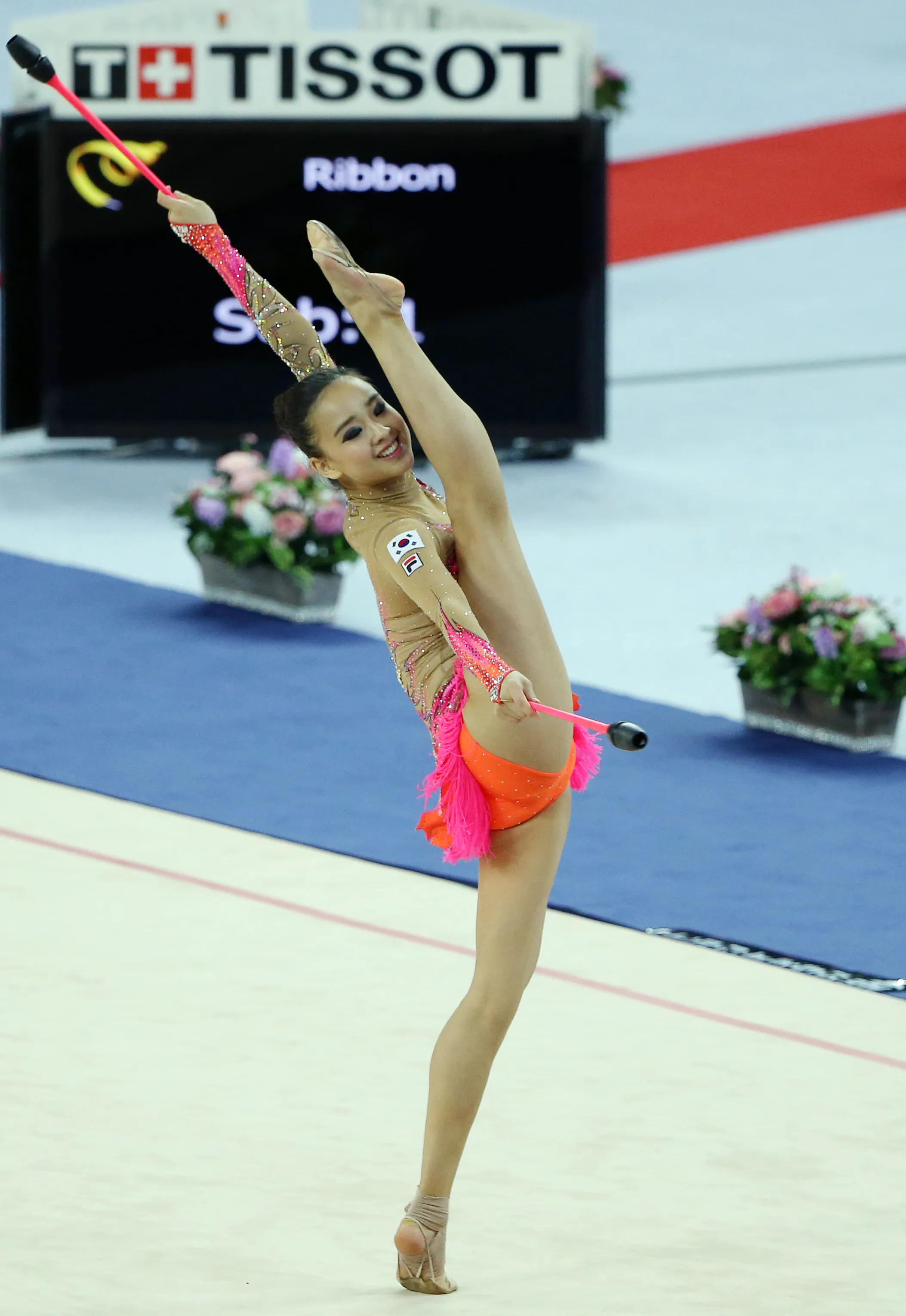
Photo: “Incheon AsianGames Gymnastics Rhythmic 03” by Korea.net / Korean Culture and Information Service, via Wikimedia Commons, licensed under CC BY-SA 2.0.

Right standing split11 A gymnast performing a 190° standing overplit.
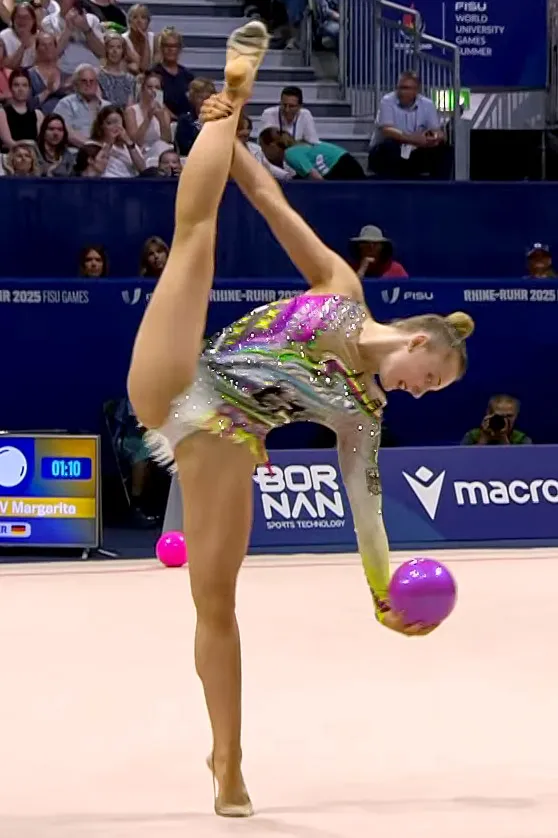
Photo: “Margarita Kolosov 2025 Summer University Games Ball” by FISU, via Wikimedia Commons, licensed under CC BY 3.0.

Right standing split10 Another perfect standing split by rhythmic gymnast Margarita Kolosov.
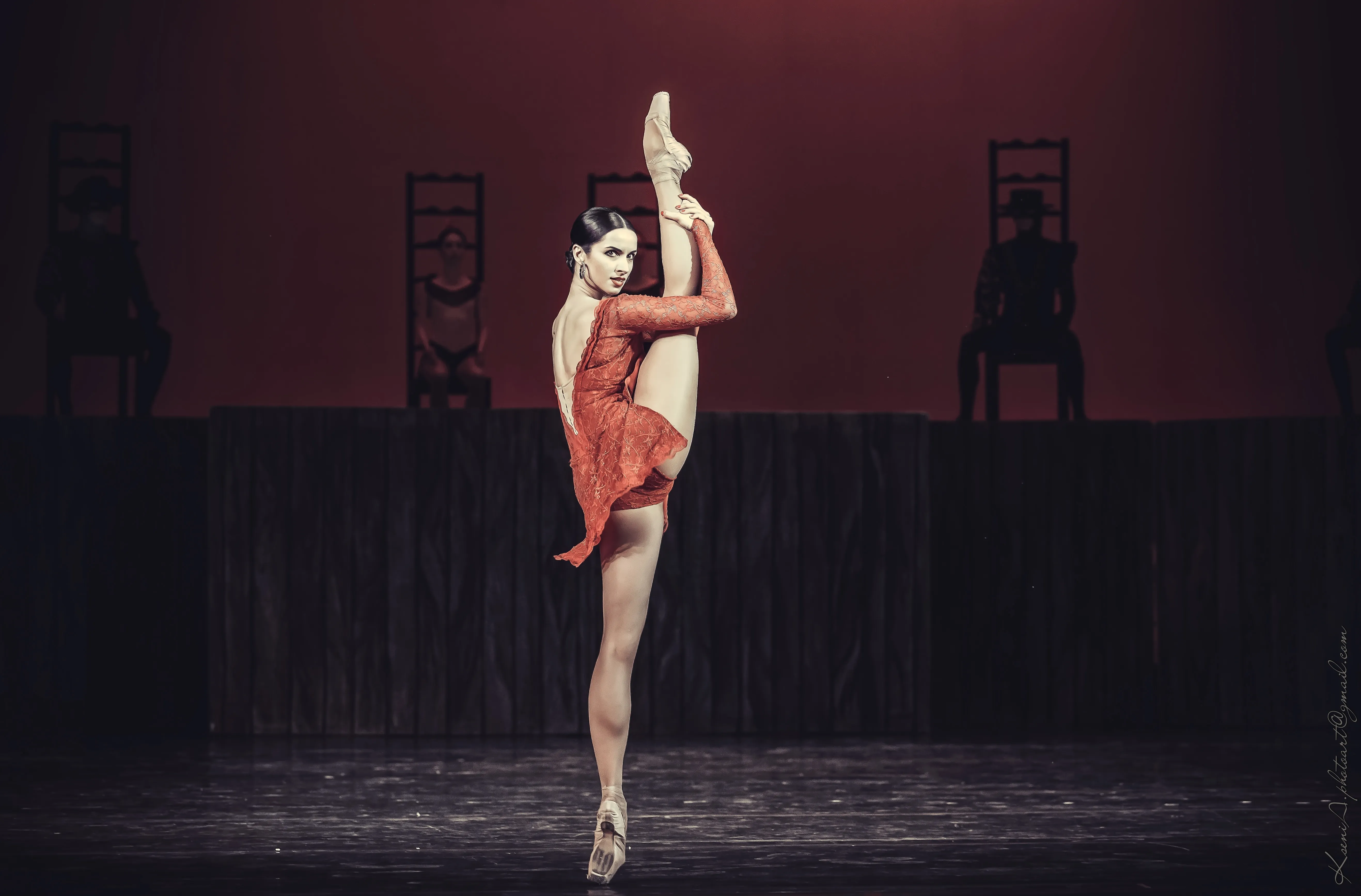
Photo: “Natalia Matsak Carmen” by Ksenia Orlova, via Wikimedia Commons, licensed under CC BY-SA 4.0.

Left standing split10 And a perfect standing split example from ballet by Natalia Matsak.
The "supine split" or standing split position while lying on the back is the passive version, where the athlete can support her front leg with arms. Also a frequent passive stretching position with a partner. In the future, graded together with the normal standing split.
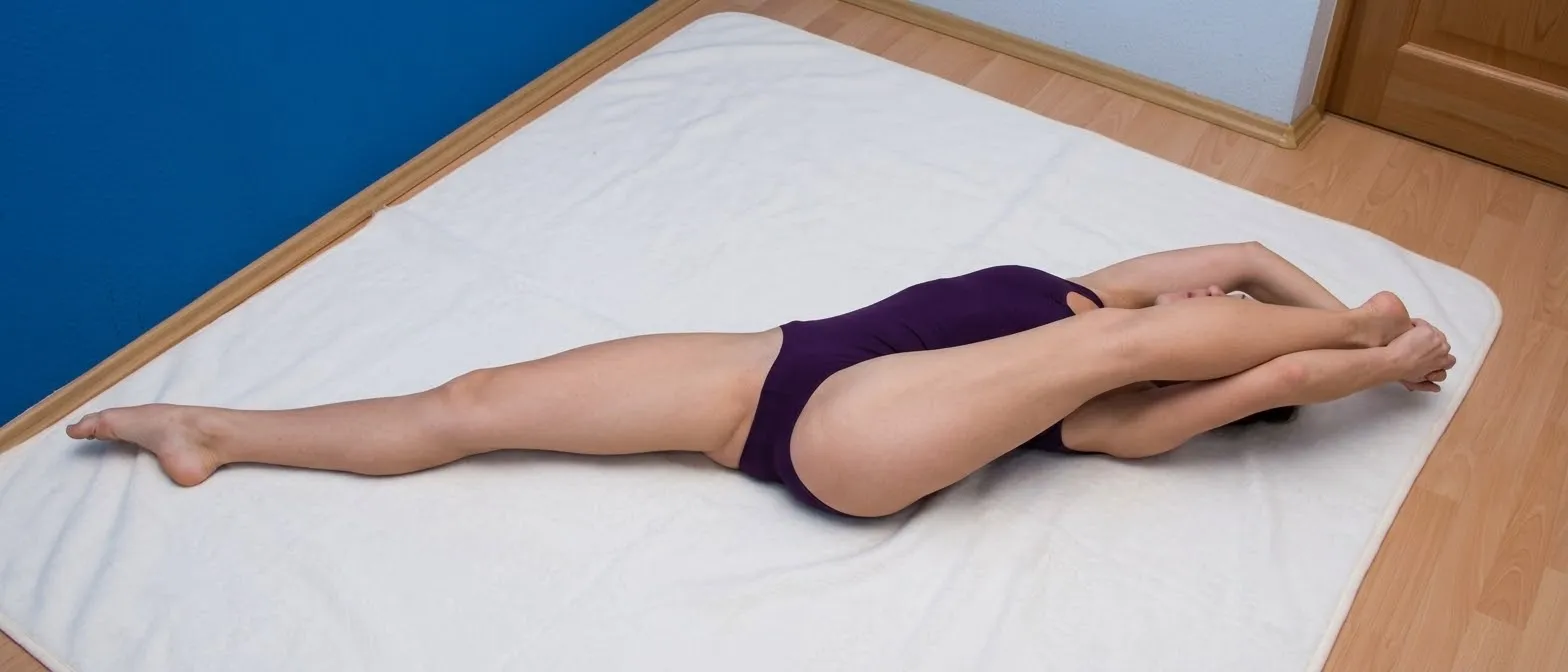
Left standing split10 (AI-generated image, please donate a real one if you own.)
Needle split
Another variant of front split. In needle position, the upper body arches back toward the lifted rear leg, aligning the spine, head, and lifted leg into a single vertical line driven by spinal backbending and hip extension.
Will also be graded as a separate category.
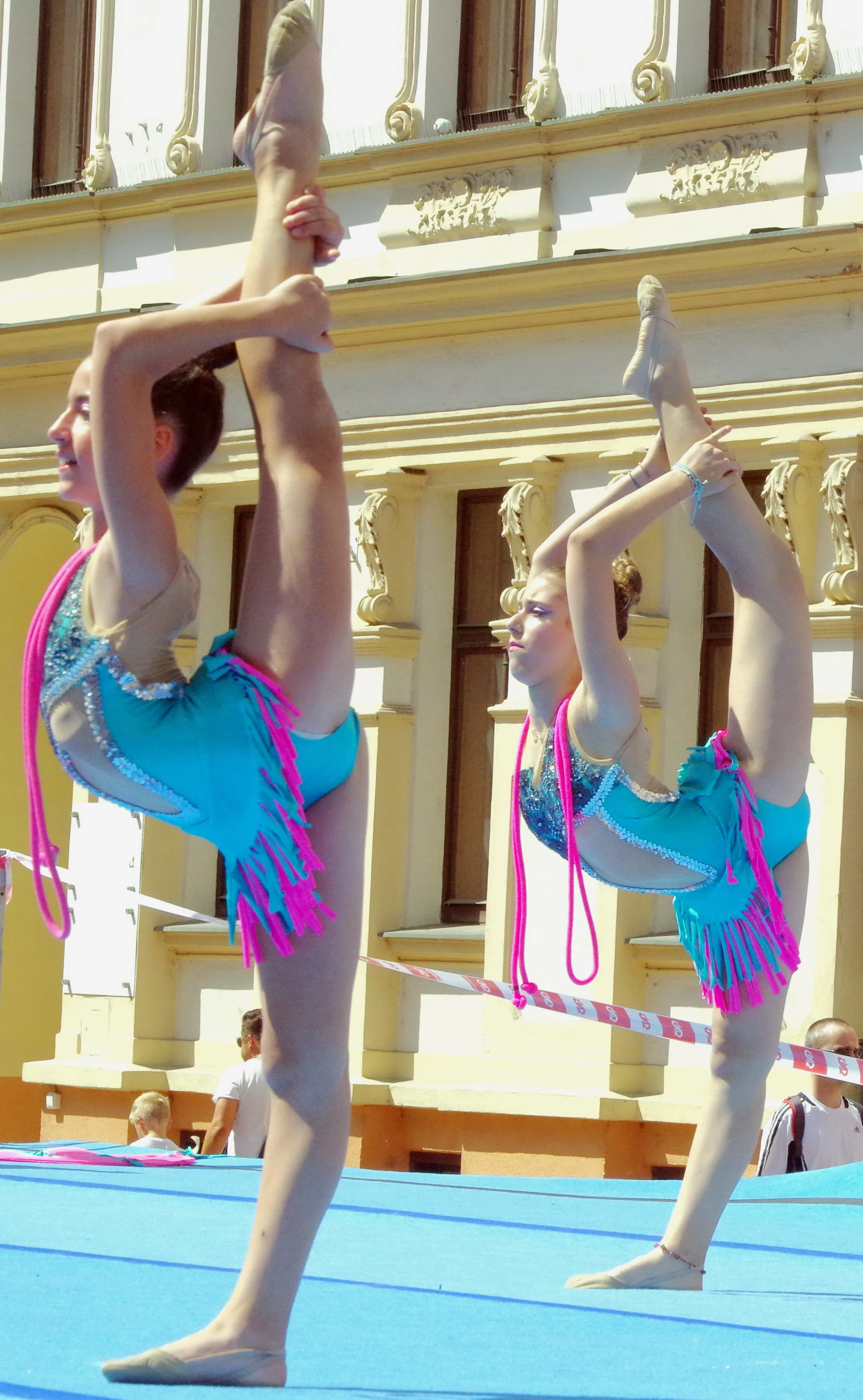
Photo: “20.7.16 Eurogym 2016 Ceske Budejovice Lannova Trida 128” by Donald Judge, via Wikimedia Commons, licensed under CC BY 2.0.

Right needle split10 Classical clean 180° needle splits.
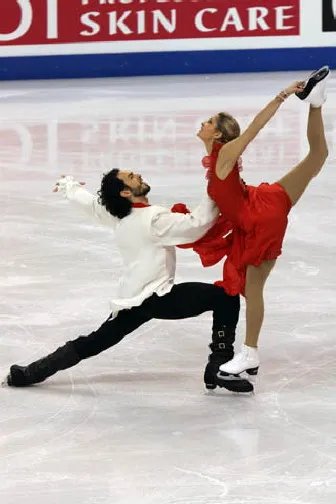
Photo: “Tanith Belbin & Benjamin Agosto SlLi 2009 Worlds” by David W. Carmichael, via Wikimedia Commons, licensed under CC BY-SA 3.0.

Left needle8 Thigh-to-thigh angle is severely less that 180°. Common flexibility level in figure skating is nowhere close to the level of rhythmic gymnastics nor ballet.
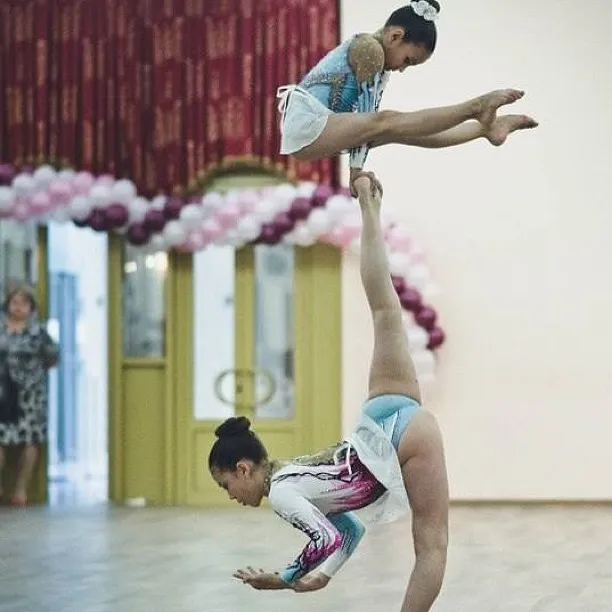
Photo: “Women’s Pair” by Kevahoya, via Wikimedia Commons, licensed under CC BY-SA 3.0.

Left front split10 NOT needle. Very clean 180° split, but notice the body position The upper body doesn't arch back from the back, as .